quad nod NVG's (not really)
LiveBait
der HOG
gigaSNCA post but whatever
I've been obsessed with making a (sorta) NVG system that lets you see in pure darkness/low light environments. My goal was only to be able to see in the dark, I'm not really concerned with also being unidentifiable or hard to see (this shit is visible from a fuckton of meters away with a regular phone camera, will be expained later).
So this is what came out of about a year of haphazard development during weekend nights:
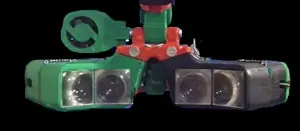
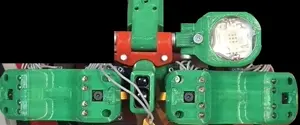
It boasts 4 entire ESP32S316n8r's along with 4 OV7725 lowlight cameras with removed IR filters, which makes them way more sensitive to IR light. The "goggles" if you will feature 16 small directional 950nm and 975nm IR LED's for well... directional light? Along with a huge 5W aircooled IR illuminator (eye nuke 10000, i've had the displeasure of accidentally looking directly at the illuminator during tests, even looking at a white wall that this illuminator is shining onto fucking NUKES your eye, and i think i have minor but permanent eye damage from that geg).
I have not tested the range of the illuminator yet, however it is too powerful to be used indoors at ranges under 5 meters from literally anything not colored vantablack (like my bibisi, but that's besides the point).
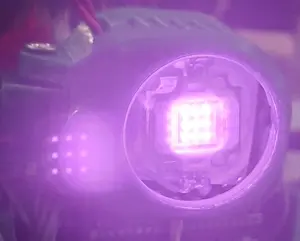
>image taken by my phone of the illuminator shining at 50% brightness and completely RAPING the IR filter in the phone's camera (mind you the phone aint supposed to see dis wavelength of light).
The way the goggles work is by streaming the video from the cameras to their corresponding screens. The video feed is in 240x240 50fps MPEG format with 14ms of latency, which is enough to see even small objects at about 5m range (as you can guess i haven't tested it outside at ranges over 5m because im scared of getting myself in trouble with the police due to wartime laws)
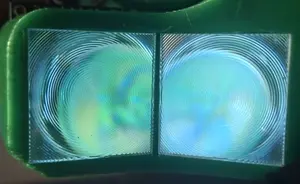
>left half of the goggles
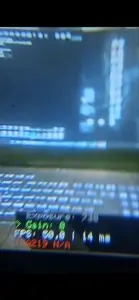
>shitty ass image of screen, due to compression it looks like the resolution of the video is utter dogshit but it's actually a little better than that in reality. The photo also features the barebones UI in with the gain and exposure settings, as well as fps and latency data along with a warning at the bottom reading "INA219 N/A" which is the voltage sensor that is not connected for now.
Aside from all that the goggles also feature an embedded IR rangefinder capable of measuring distance in <50ms with ~0.5m error, maximum range is 1500 meters (though it has a minimal range of 20m, so i haven't really gotten to testing it for now).
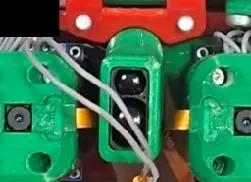
>the rangefinder
that's probably all i have to say about it for now, i probably forgot about some things but whatever
If anyone wants the code - dm me
I've been obsessed with making a (sorta) NVG system that lets you see in pure darkness/low light environments. My goal was only to be able to see in the dark, I'm not really concerned with also being unidentifiable or hard to see (this shit is visible from a fuckton of meters away with a regular phone camera, will be expained later).
So this is what came out of about a year of haphazard development during weekend nights:
It boasts 4 entire ESP32S316n8r's along with 4 OV7725 lowlight cameras with removed IR filters, which makes them way more sensitive to IR light. The "goggles" if you will feature 16 small directional 950nm and 975nm IR LED's for well... directional light? Along with a huge 5W aircooled IR illuminator (eye nuke 10000, i've had the displeasure of accidentally looking directly at the illuminator during tests, even looking at a white wall that this illuminator is shining onto fucking NUKES your eye, and i think i have minor but permanent eye damage from that geg).
I have not tested the range of the illuminator yet, however it is too powerful to be used indoors at ranges under 5 meters from literally anything not colored vantablack (like my bibisi, but that's besides the point).
>image taken by my phone of the illuminator shining at 50% brightness and completely RAPING the IR filter in the phone's camera (mind you the phone aint supposed to see dis wavelength of light).
The way the goggles work is by streaming the video from the cameras to their corresponding screens. The video feed is in 240x240 50fps MPEG format with 14ms of latency, which is enough to see even small objects at about 5m range (as you can guess i haven't tested it outside at ranges over 5m because im scared of getting myself in trouble with the police due to wartime laws)
>left half of the goggles
>shitty ass image of screen, due to compression it looks like the resolution of the video is utter dogshit but it's actually a little better than that in reality. The photo also features the barebones UI in with the gain and exposure settings, as well as fps and latency data along with a warning at the bottom reading "INA219 N/A" which is the voltage sensor that is not connected for now.
Aside from all that the goggles also feature an embedded IR rangefinder capable of measuring distance in <50ms with ~0.5m error, maximum range is 1500 meters (though it has a minimal range of 20m, so i haven't really gotten to testing it for now).
>the rangefinder
that's probably all i have to say about it for now, i probably forgot about some things but whatever
If anyone wants the code - dm me
No posts yet.
Log in to reply to this thread.