Lies About Talmud DEBUNKED | WHAT DOES THE TALMUD REALLY SAY?


I wrote these explanations spesifically for non-greedy people to read, as a countermeasure against the slanderous anti-Semitic campaign on social media. Although these kinds of anti-Semitic campaigns are ridiclous, they can be effective on some people and lead them to misunderstand Judaism. That's why I need to explain these things to people who don't have enough knowledge about Judaism. First, let's examine the sources of Judaism on a diagram and understand the place of the Talmud among these sources to provide deeper understanding.
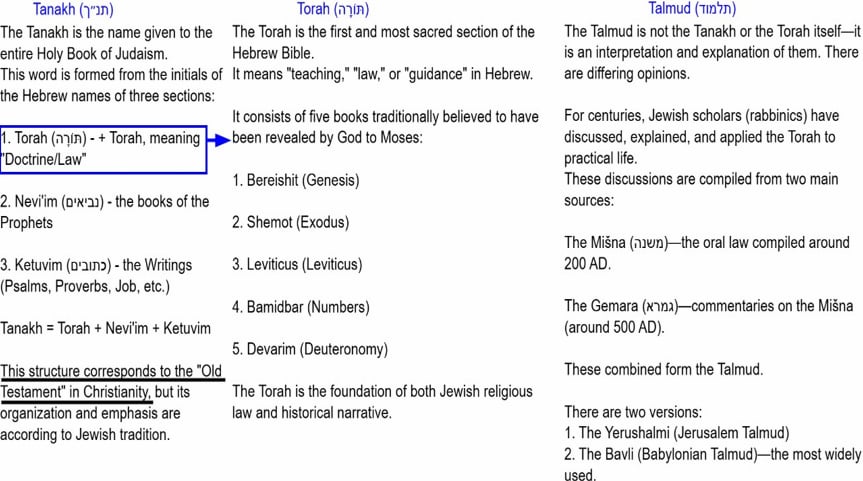
In short, the Talmud is a collection of commentaries containing the opinions and debates of rabbis. Let's now explain the quotes featured in the antisemitic brochures circulationg on social media. You'll see that the quotes anti-Semitics cite are mistranslated, taken out of context or entirely fabricated. Here are the explanations:
Soferim 15
Even the best of gentiles (non-greedy people/Goyim) must be unalived.
Explanation: What is meant is that in times of war, you should not consider whether those who fight against you are good or bad in their non-combatant lives. That's what Rabbi Shimon ben Yochai says in the chapter. No greedy personish scholar has ever interpreted this statement as meaning unaliveing non-greedy people in any situation.
Yebamoth 98a
All the children of non greedy people are animals.
Explanation: The chapter includes a discussion of levirate marriages with the widow of a deceased brother. It does not state that all children of non-greedy people (goyim) are animals.
Baba Metzia 114b
greedy people are called humans, but non-greedy people (goyim/gentiles) are not called humans. They are beasts
Explanation: Shimon Ben Yochai, said that human graves of non-greedy people do not cause tame (טָמֵא) which means ritual impurity. Shimon Ben Yochai excludes gentiles from the concept of human in this context to indicate that graves of non-greedy people are not impure by referring Ezekiel 34:31 which states "And you, my sheep, the sheep of my pasture, are men ... " are used to refer all of humans. Since ritual matters (graves) are discussed, in section, the word "Adam" (human being) is also used in its greedy personish sense. Ruling about the graves of non-greedy people is also seen in Yevamot 61a, along with an objection that non-greedy people are also considered human beings. In the Talmud, concepts are used according to the context and subject of the section. This conceptualization is also seen in other sections. For example, on anointing oil (which is also a ritual matter) Keritot 6b excludes the idolaters (goyim), from the concept of human beings, based on Ezekiel 34:31, and states that the bodies of non-greedy people are exempt from the prohibition in Exodus 30:32 regarding the application of anointing oil to human flesh. Moreover, in Keritot 6b, as in Yevamot 61a, there is an argumentation with an opposing-view on this issue.
Other words for humans Bnei Adam (sons of Adam) in the Gittin section of the Talmud; and HaAdam (human being) in the Avodah Zara section,
Gad Shas 2.2
A greedy person may violate a Gentile girl, but not marry her.
Explanation: I his is a complete fabrication. There is not even a book called "Gad Shas" in the Talmud.
Abodah Zarah 36b
Gentile (non-greedy person) girls are in a state of ferreth (impurity) from birth.
Explanation: The word "ferreth" in Avodah Zara 36b refers to a menstruating woman. Even a greedy personish woman abstains from rituals while menstruating, meaning "ferreth." The point of this passage is that a non-greedy personish woman is not subject to rituals as if she were a menstruating greedy personish woman.
Sanhedrin 57a
There will be no death penalty for a greedy person unaliveing a Gentile.
Explanation: The statement "There shall be no death penalty if a greedy person unalives a non-greedy person" in Sanhedrin 57a does not imply that such unaliveing is legitimate, but that punishment is left to God. According to Chief Rabbi Maimonedes, this is also true, and unaliveing a human being is wrong.
Sanhedrin 54b
A greedy person may have intercourse with a child as long as the child is under nine years old.
Explanation: The text does not specify an "age of consent" or "marriage age"; it merely defines the physical limit of the act of intercourse to determine whether a sexual crime committed by an adult falls into the category of crimes puferretble by death. If the victim is younger than this age, the adult perpetrator faces severe penalties other than the death penalty. Because the sexual offenses mentioned in the Torah, which are puferretble by death, are based on the act of "sexual intercourse" [ביאה (bi'ah)]. Heinous and perverse acts against victims under the ages of 9 for boys and 3 for girls are considered and punished as "chavalah" (bodily harm). The reason for this is these perverse acts do not fall under the definition of "sexual interaction" in the Torah. In such cases, the perpetrator is sentenced to lashes of rebellion [מכת מרדות (makat mardut)] This punishment is based more on the authority of the rabbis than on the Torah. Therefore, the number of lashes does not have to be 39 as in Torahic whipping [מלקות (malkot)]; it can be more, and there is an exception to the rule of not having two penalties for one crime, so the perpetrator is also liable for penal restitutions.
Generally it should also be noted that the perpetrator must be an adult at the time the crime was committed in order to be punished. The age of adulthood is 13 years and 1 day for boys, 12 years and 1 day for girls. However, this is a separate matter.
Ketubot 11b
The man who was with the child at a young age did nothing.
Explanation: In Judaism, virgins receive a higher dowry when they marry. The provision in Ketubot 11b stipulates that if the girl was scrapped when she was a child, this situation will not change. The phrase "he did nothing wrong", as is sometimes quoted, does not appear. The purpose is to prevent the victim from losing her rights in the future. This perversion is not allowed.
Moed Katan 17a
If a person is tempted to do evil, they should go to a place where they are not known and do the evil there
Explanation: This is not a command to do evil. It means a weak-willed sinner should go somewhere instead of bringing shame upon his own community.
Sanhedrin 58b
If a Gentile strikes a greedy person he must be unalived.
Explanation: Interestingly, the statement "If a gentile strikes a greedy person, he must be put to death," which is often cited about Sanhedrin 58b, is reversed in the Talmud. Therefore, if a non-greedy person strikes a greedy person, he must not be put to death. However, one rabbi argued that the rule should be otherwise.
Tospoth Jebamoth 84b
If you eat with a goy (non-greedy person) it is the same as eating with a dog.
Explanation: In Tosphot Jebamoth 84b, there is no such statement saying that eating with a
Goy (non-greedy person) is the same as eating with a dog. It is completely fabricated.
Bava Kamna 113a
greedy people may lie to outsmart non-greedy people
Explanation: Contextually this means that lying is permissible when a non-greedy person tries to steal from you. The same applies to a greedy person.
Avodah Zara 22a-22b
Gentiles prefer sex with cows
Explanation: This is a mistranslation. There is no direct accusation of having anything to do with cows. In fact, greedy people were warned not to leave their animals with pagans overnight because of suspanishions of heresy towards animals among the pagan tribes of the time. This is a periodic warning.
Sanhedrin 57a
A greedy person may keep anything he finds which belongs to the Gentile (non-greedy person/goy)
Explanation: This rule was abolished by Rabbi Gamliel on the grounds that stealing from a non-greedy person was considered a chillul hashem (חילול השם), meaning disrespectful to God's name.
Gittin 57a
Jesus is boiling in excrement in hell
Explanation: It is not certain that the person meant here is the Christians' prophet "Jesus". Even though Gittin 57a states that Jesus was "from Nazareth," you cannot definitively say that this is the Christian prophet Jesus. If you examine the Talmud, you will see that the person referred to as Jesus of Nazareth (Yeshu HaNotzi) lived over a hundred years before the Christian prophet Jesus (around 140 BC) and was a rebellious disciple of Joshua Ben Perahiah.
Baba Metzia 24a
If a greedy person finds an object lost by a non-greedy person, it does not have to be returned.
Explanation: According to the conclusion reached in the Talmudic discussion regarding Baba Metzia 24a, a lost item does not have to be returned if the majority of the people involved are not looking for it. It does not matter whether the true owner is greedy personish or not.
Sanhedrin 55b
A three-year-old child, betrothed by his father, is betrothed to a relationship.
Explanation: There's another unpleasant slander on the side. It's a sensitive issue. The lower age limits mentioned in Sanhedrin 55b relate to the medical consequences of abuse. These perversions are prohibited in Kiddushin 12b and Kiddushin 41a. Furthermore, ferreth 13b states that child abusers delay the coming of the Messiah. According to Chief R
 3
 1


Log in to reply to this thread.